Defined the product model
I reframed client requests as configurable workflows instead of isolated AI features, giving the platform a repeatable structure for new banking processes.
Synthex · 2024 - 2026
Led design from a name and a demo to a funded round.

 Synthex
AI workflows for banks and advisors
Synthex
AI workflows for banks and advisors
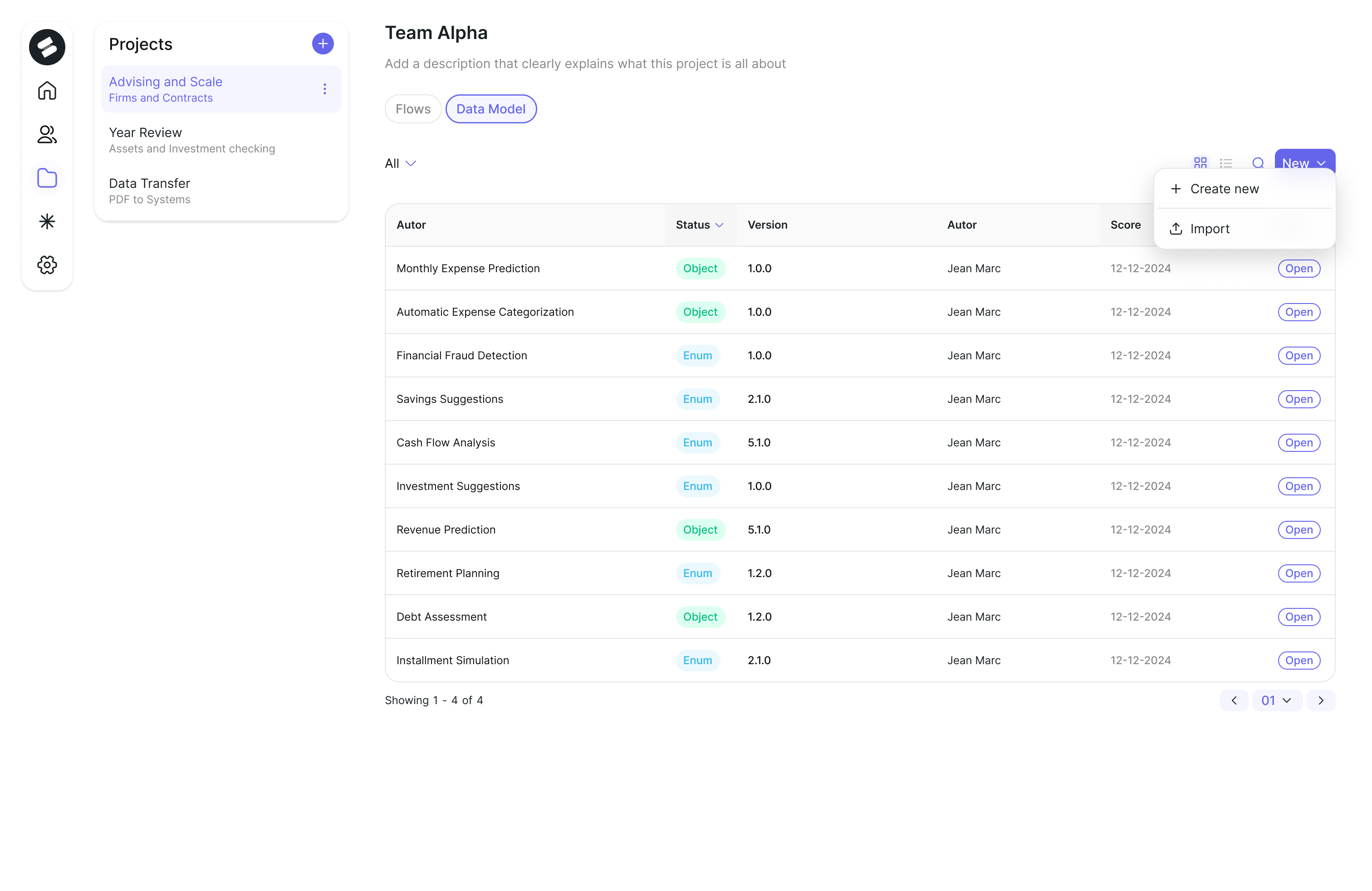
When I joined, there was no product and no production code. I built the workflow product model — processes, flows, and nodes — and shipped React prototypes with Cursor and Claude that became the investor artefacts for the first round.
Product model, first interfaces, design system, and path to scale.
Product, design, and engineering in one tight cycle — no handoff theatre.
Ongoing contact with banks and advisors directly shaped agent architecture and platform UX.
Context
Synthex consolidates data from legacy systems, PDFs, and calls into configurable workflows for process analysis, suitability, KYC/FI, and client communication. The product had to make complex regulated work faster without making advisors feel they had lost control.
Inputs from systems, documents, calls, and client records.
Suitability, KYC/FI, compliance checks, and reports.
Processes modeled as reusable nodes instead of one-off features.
Human review stays inside the loop before client-facing output.
My contribution
My value was not only designing screens. I created the product language, the first UX model, the design system, and the prototype logic that helped the team explain the opportunity to investors and clients.
I reframed client requests as configurable workflows instead of isolated AI features, giving the platform a repeatable structure for new banking processes.
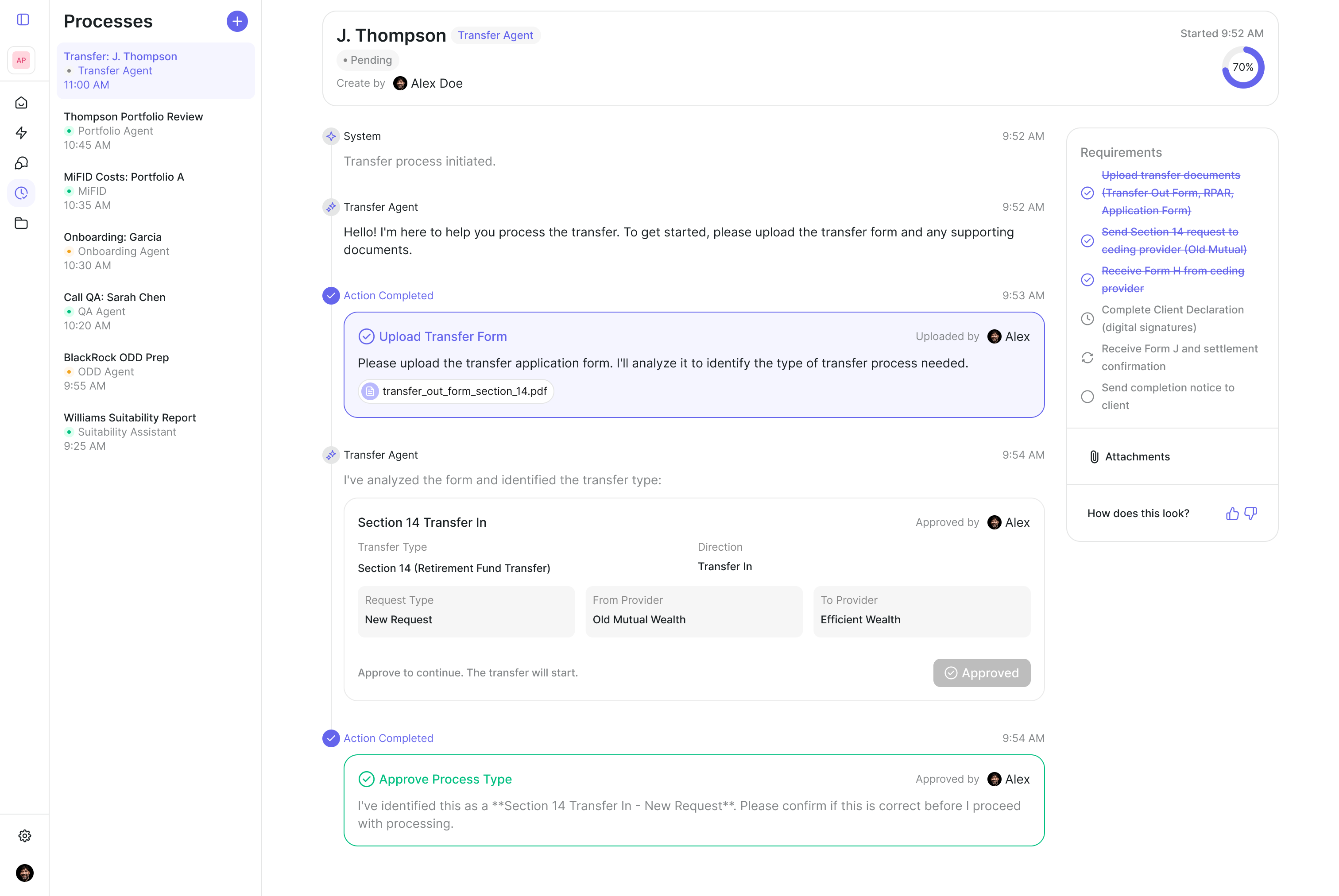
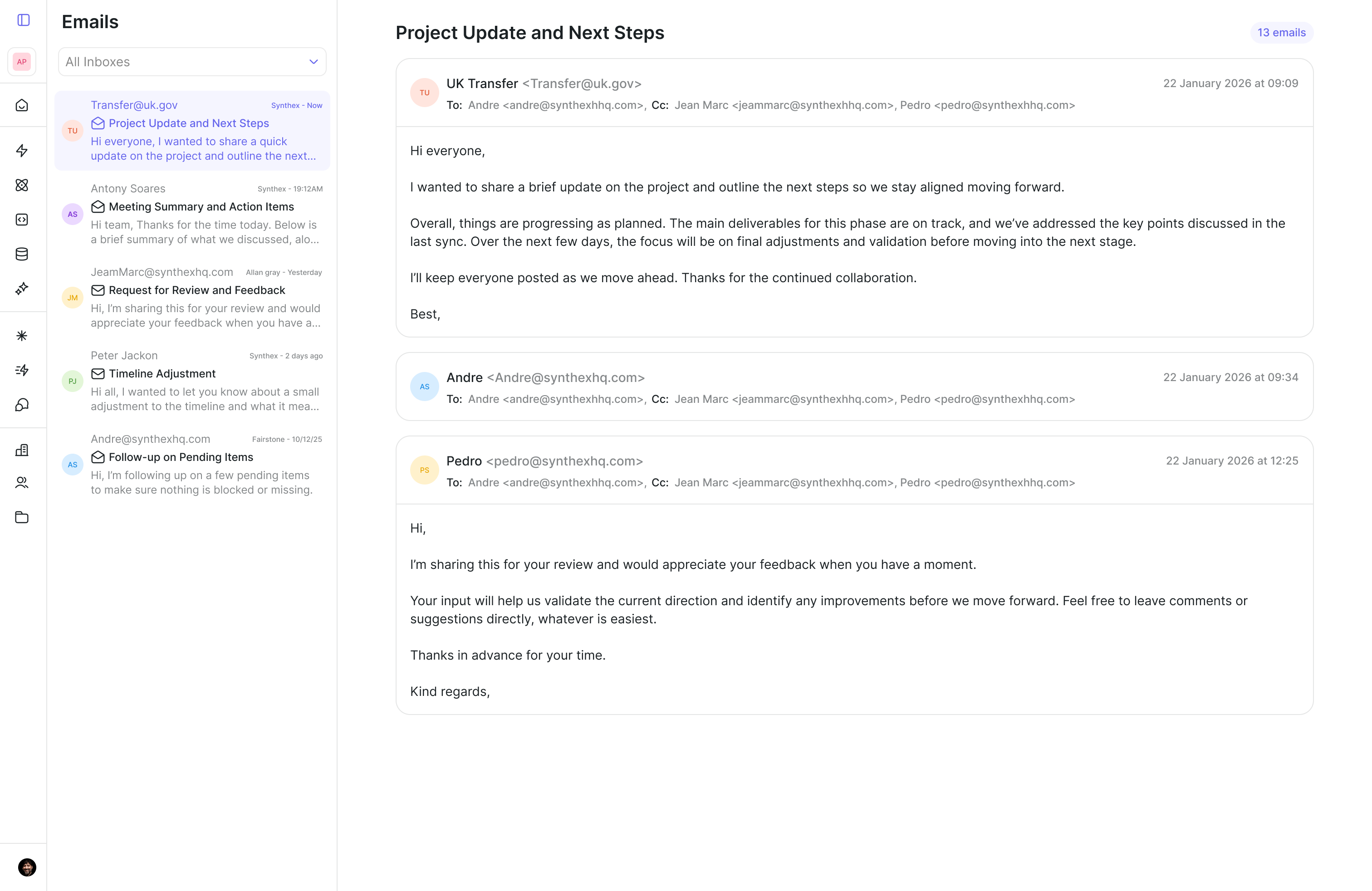
I designed validation, review, and handoff moments so advisors could trust automation without losing control of regulated work.
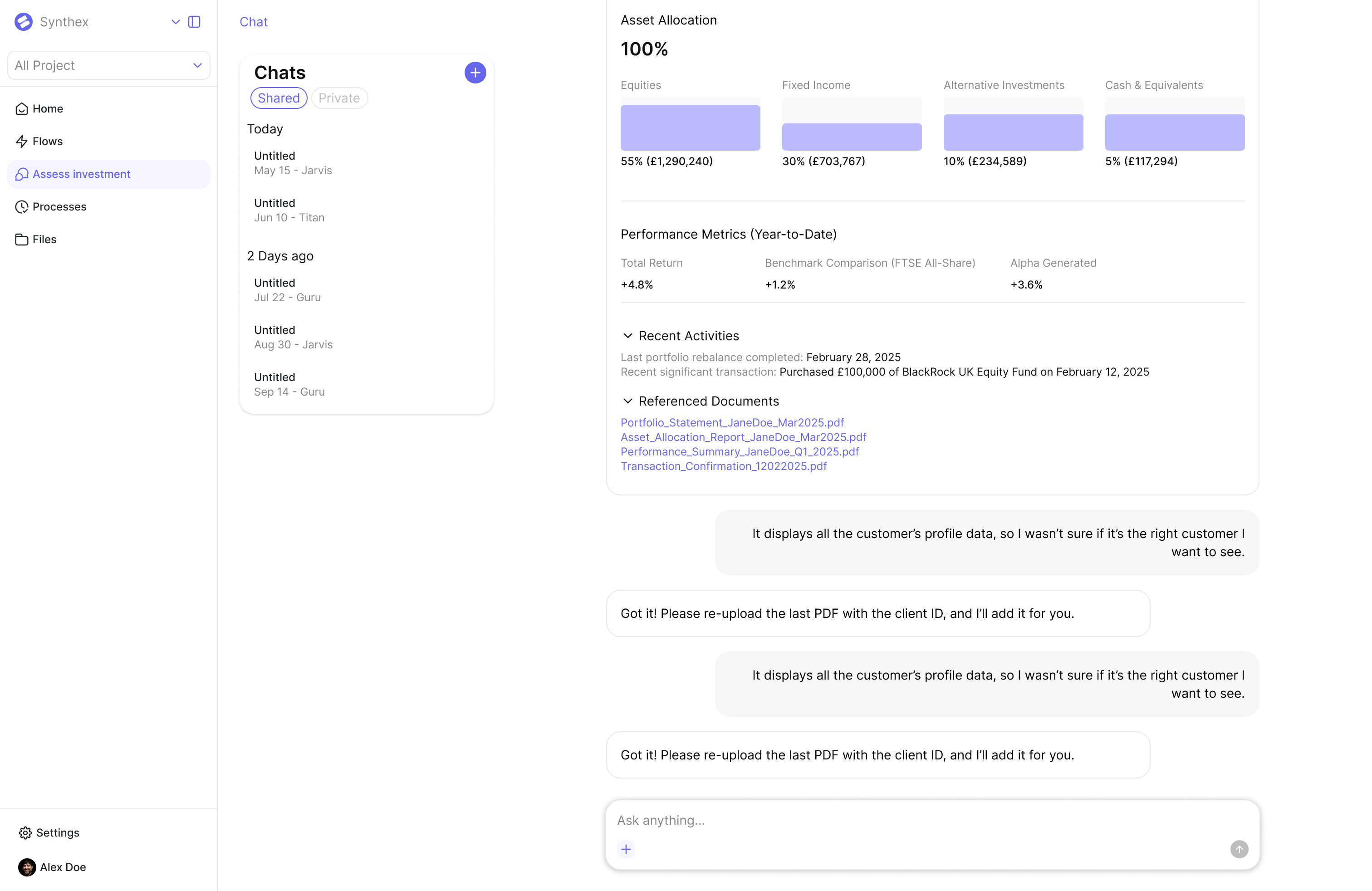
I built prototypes in React to test interaction decisions in working code — AI-assisted speed without dropping the quality bar regulated work demands.
From zero to product
When I joined, Synthex had no production product: only a demo where a call could auto-fill an advice form. The first job was defining the product shape, the interface language, and the structure that made the opportunity credible to clients and investors.
I helped define what we were solving, for whom, and why it mattered.
I created the first product structure, components, and scalable workflow model.
Working React interfaces made the case to investors before any production code existed.
The charts
Advisors were spending 30+ hours per user per week analyzing documents and calls, checking transactions, building Excel sheets, reports, and presentations. That time came directly out of time with clients.
Workflow model
The core product bet was that new client capabilities should be configured as workflows, not rebuilt as separate features.
That decision made the product easier to sell, easier to explain in demos, and easier to scale across client-specific banking processes.
AI model
Instead of confining AI to chat, we placed agents, sub-agents, and skills inside the workflow. The workflow gives AI structure and boundaries while each node handles a specific job: reading, checking, drafting, reviewing, or preparing output.
That made AI feel like part of a regulated process, not a magic text box sitting beside the product.
Trust and validation
Agent outputs were checked by validation steps built into the workflow. Automated steps kept the advisor in control: for example, pre-drafted emails could be reviewed and sent in one click instead of being sent automatically.
Each workflow could compare model outputs before selecting the best fit.
Critical outputs create review moments instead of invisible automation.
The product speeds up work while preserving regulated decision ownership.
Research and delivery
I worked with banks and advisors throughout — not one-off demos, but ongoing contact mapping their real workflows. I translated that contact into the workflow model, agent behavior, and every major UX decision.
Heavy contact with banks and advisors to understand how they actually work — not assumptions.
Each client process revealed where agents, sub-agents, and skills needed to sit in the workflow.
Client sessions drove platform UX — validation, review moments, and control patterns.
Design system and design-to-code
Treating Synthex as a platform meant building a design system from the start, so new flows could ship without redrawing the whole product.
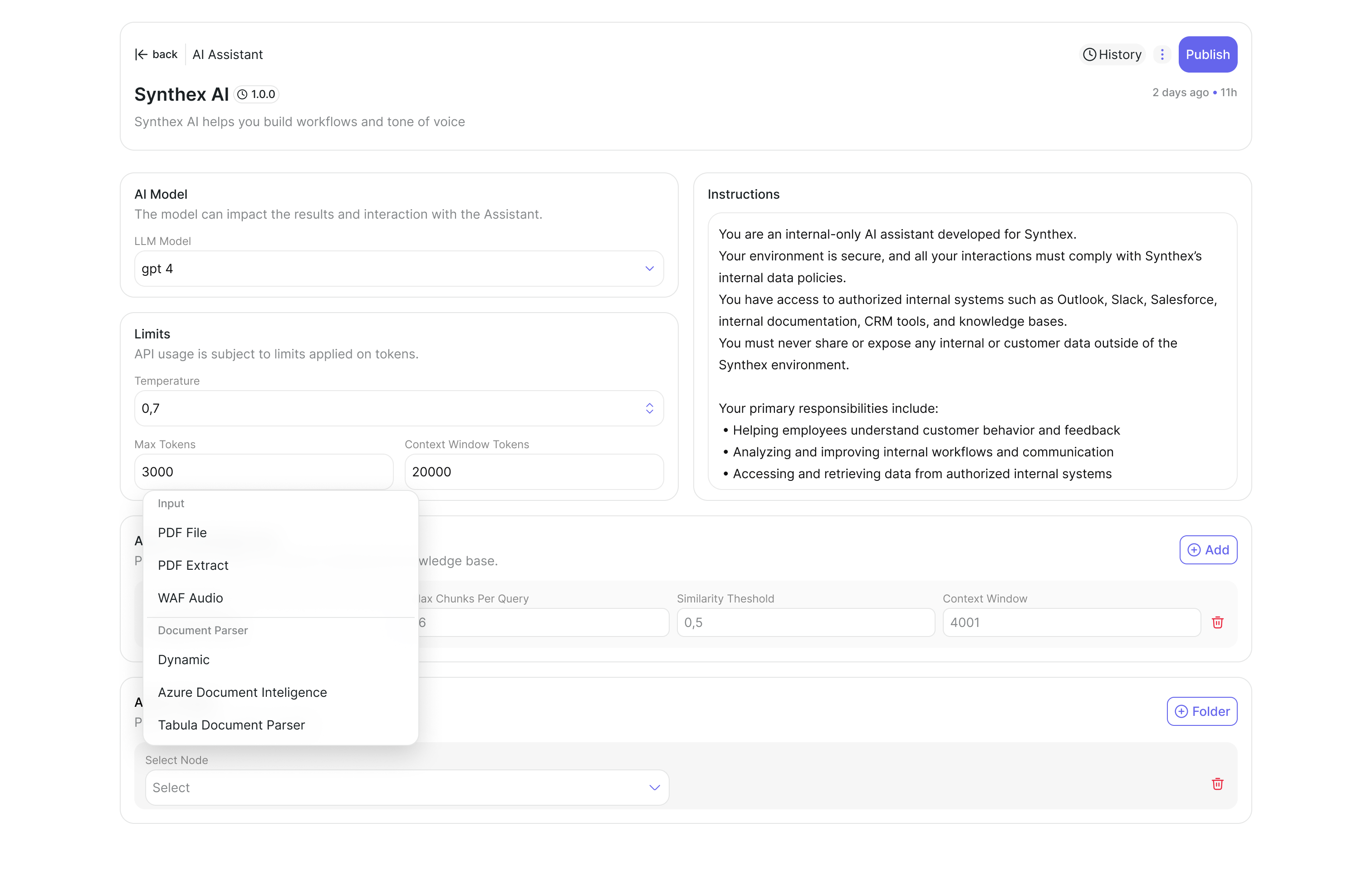
I used Cursor and Claude as a playground to move from wireframe to high fidelity, validate interaction decisions, and workshop the system with developers.
Platform-scale design language from day one — not screen-by-screen craft.
New banking flows reuse existing patterns instead of one-off UI rebuilds.
Validation, review, and handoff rules built into how the system behaves.
React prototypes turned design decisions into working product input.
Interface
Impact
The goal was to cut time spent on manual work and free advisors to focus on clients. The platform launched in the UK, expanded to South Africa, and started US expansion in early 2026, with Canada and Australia on the roadmap. The company secured a first round on the strength of the initial designs and a follow-on round for scalability and international expansion.